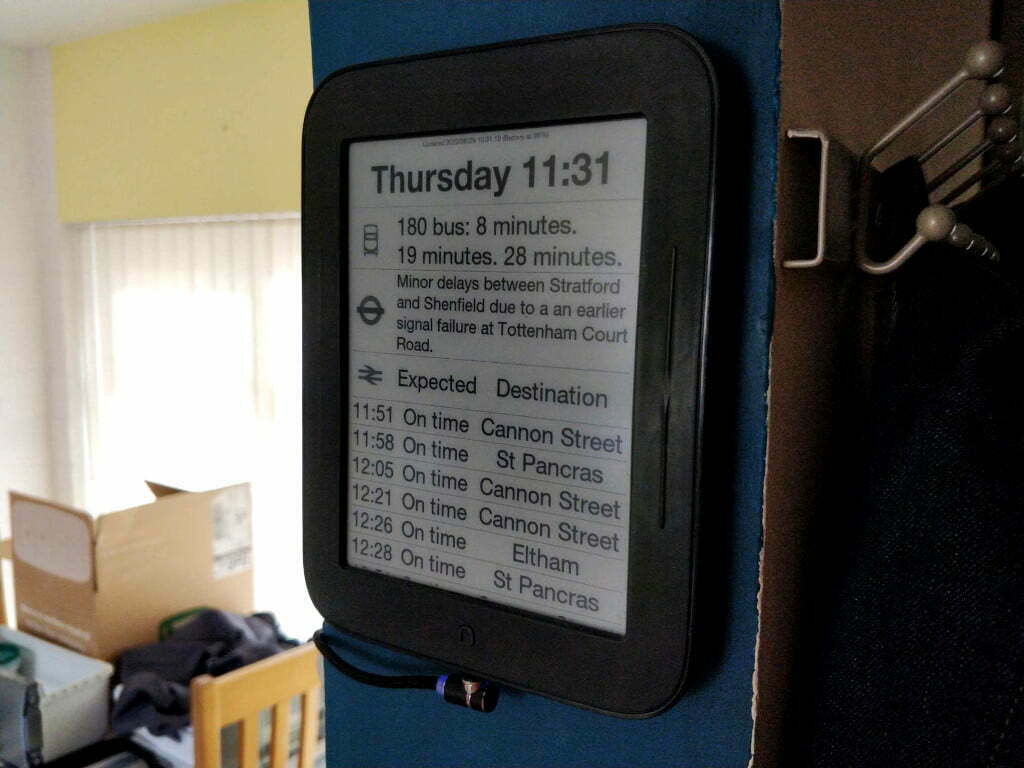
Last year, I blogged about how I turned an old eReader into an Information Screen. I've since updated the display to show me three different sets of transport information. At a glance, I can see the next bus, whether there are delays on the Elizabeth Line, and if my regular trains are running. Here's how all three APIs work. Bus The bus is the easiest one of all. Transport for London (TfL) …
Continue reading →

The social network service "Mastodon" allows people to publish posts. People can reply to those posts. Other people can reply to those replies - and so on. What does that look like in the API? Here's a quick guide to the concepts you need to know - and some code to help you visualise conversations. When you scroll through the website, you normally see a list of replies. It looks like this: …
Continue reading →

This is a mixture of lament and how-to guide. Suppose you've reviewed lots of books. It's pretty easy to generate a link to let people buy the book at Amazon or any other online store. But how do you link to a user's local library? You can't. There is no "search every library in the UK" service. You can search the British Library, but they generally don't deliver to your local town centre. …
Continue reading →

M'colleague Charles has introduced me to the most spectacular phrase - "Time To 200". That's a measurement of the length of time it takes a new user to go from signing up to your API to getting their first HTTP 200 response. Think about the last time you started using a new API... Fill in a tediously long registration form Set up billing in case you go over the free trial limits Wait for a…
Continue reading →

(This post written partly to tease my delightful colleague Charles, but also as a way of thinking about user needs.) During a recent Open Data Café, one of the guests made an entirely reasonable point. An API only method of getting data is elitist. Martine Wauben@MHWaubenAlready having my assumptions tested - are APIs elitist? food for thought for me #ODCafe❤️ 2💬 0🔁 011:44 - Sat 10 April 2021 I…
Continue reading →

Recently, one of the accounts I follow on Twitter was hijacked. It was turned into a PS5 giveaway scam. The people who hijacked the account changed the name, avatar, and deleted all the previous Tweets. Here's how I found who the original owner was, and managed to contact them. A Twitter account has a screen name. Mine is @edent. It is possible to change your screen name. Each Twitter account…
Continue reading →

As part of my MSc, I'm being asked to think about "digital disruption" - so here are some personal thoughts about the future of transactions with the state. The UK Government has a lot of APIs to let computers communicate with each other. Most of them are department-to-department. For example, the Ministry of Birds wants to get an updated list of incidents from the Department of Avian Accidents …
Continue reading →

This blog runs on WordPress. Using their JetPack plugin, I get fairly detailed stats on views and visitors. But, bizarrely, the API is undocumented. Well, sort of... Let me explain: Just Show Me The Code Here's the API call to get a year's worth of data about your blog. https://public-api.wordpress.com/rest/v1.1/sites/shkspr.mobi::blog/stats/visits ?unit=day &date=2021-01-03 &quantity=365 …
Continue reading →

One of the things I loved about Facebook was its "On This Day" feature. There's something delightful about seeing what nonsense you were talking about on this day a decade ago. Twitter doesn't have anything like that. So I built it. Introducing - Twistory.ml Note: Twitter's recent changes means this no longer works. Stick your @ name in, hit the big button, and you'll get a list of everything…
Continue reading →
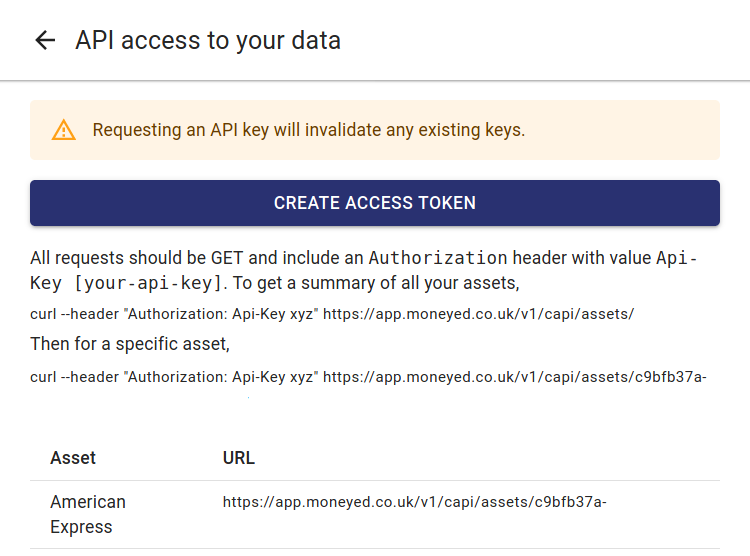
Update! Moneyed shut down in 2021. After writing about how to use MoneyDashboard's unofficial API, the good folk at Moneyed told me about their officially supported API! So here's a quick review & howto guide. Moneyed is a slightly strange service. I think it is designed for companies to give as a benefit to their employees. But you can sign up as an individual. The first month is free - but I…
Continue reading →

Note: MoneyDashboard is now closed. Yesterday, I wrote up how to use the MoneyDashboard Classic API. Read that blog post first before reading this one. MoneyDashboard have launched a new "Neon" service. The API is a bit more simple, but authentication is harder. Here's a quick guide to the bits of the API that I found useful. I've lightly redacted some of the API responses for my privacy. …
Continue reading →
Note: MoneyDashboard is now closed. The OpenBanking specification is brilliant. It allows you to aggregate all of your financial accounts in one place. You can give read or write access to apps and services. Magic! API access is restricted to registered financial institutions. That's good, because it puts up a barrier to entry preventing dodgy companies slurping up your data and sending all…
Continue reading →