Within the UK's Civil Service you occasionally hear the expression "being invited to a meeting without biscuits". It implies a rather frosty discussion without any of the polite niceties of a normal meeting. In general though, even when people have severe disagreements, it is rare for tempers to fray. It is even rarer for those internal disagreements to spill over into public. Which is what…
Continue reading →

The UK Government, for all its faults, is pretty good at publishing contracts it has awarded. That's why I get depressed when I see rage-bait nonsense about how companies have been award "Top Secret" deals. Right now you can go to https://www.contractsfinder.service.gov.uk and search for whichever bête noire has you riled up. You might want to argue that the company is corrupt, incompetent, or …
Continue reading →
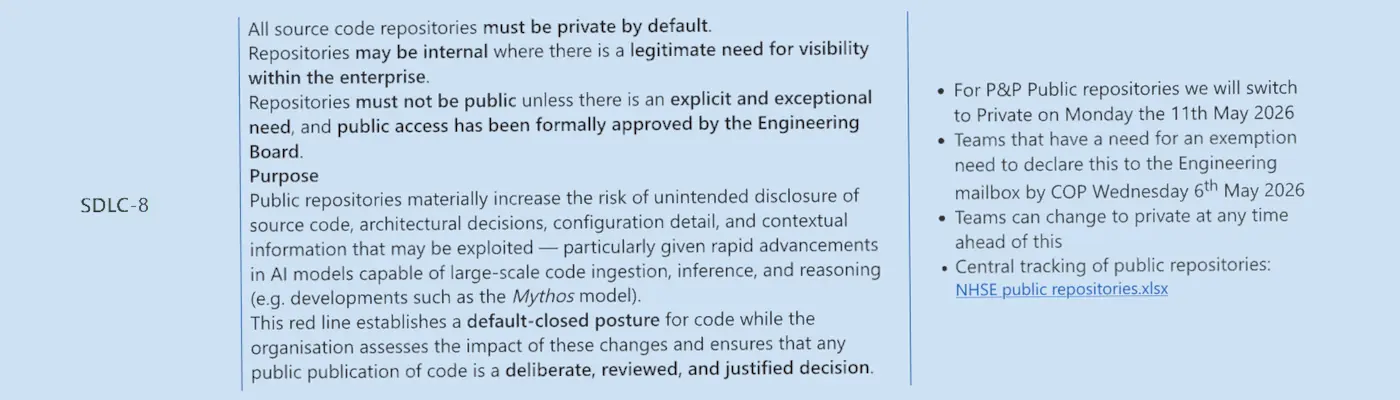
The NHS is preparing to close nearly all of its Open Source repositories. Throughout my time working for the UK Government - in GDS, NHSX, i.AI, and others - I championed Open Source. I spoke to dozens of departments about it, wrote guidance still in use today, and briefed Ministers on why it was so important. That's why I'm beyond disappointed at recent moves from NHS England to backtrack on…
Continue reading →

Much Sturm und Drang in the world of Open Source with the announcement that the "Mythos" AI is now the ultimate hacker and is poised to unleash havoc on every code base. So should you close all your Open Source projects to make them safe? No. Firstly, all your Open Source code has already been slurped up. It was all ingested for "training purposes" years ago. If it was moderately interesting…
Continue reading →

When I worked for the UK Government I was once asked if we could find a way to pay for all the Open Source Software we were using. It is a surprisingly hard problem and I want to talk about some of the issues we faced. The UK Government publishes a lot of Open Source code - nearly everything developed in-house by the state is available under an OSI Approved licence. The UK is generally pretty…
Continue reading →

It is refreshing to read a political polemic which contains useful actions the reader can take. Too many books about the social problems with technology end up being a diagnosis with no cure. Paloma Oliveira's new book (with technical review by my friend Dawn Foster) is a deep dive into how we can all make Open Source more inclusive and equitable. Unlike most tech books, it doesn't follow the …
Continue reading →

Most of the people who run Open Source projects are mortal. Recent history shows us that they will all eventually die, or get bored, or win the lottery, or get sick, or be conscripted, or lose their mind. If you've ever visited a foreign country's national history museum, I guarantee you've read this little snippet: King Whatshisface was a wise and noble ruler who bought peace and prosperity…
Continue reading →
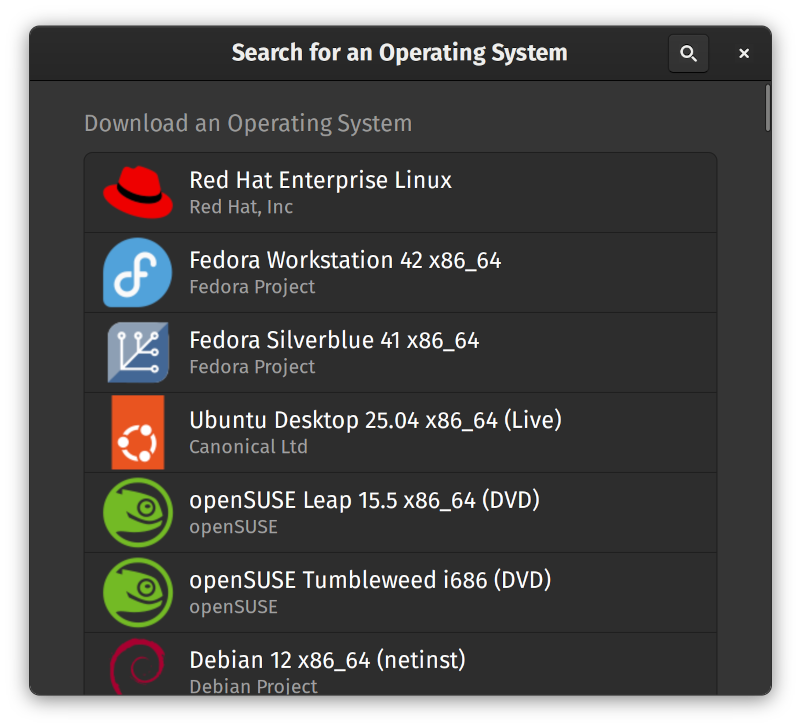
If you've spent any time using Linux, you'll be used to installing software like this: The README says to download from this link. Huh, I'm not sure how to unarchive .tar.xz files - guess I'll search for that. Right, it says run setup.sh hmm, that doesn't work. Oh, I need to set the permissions. What was the chmod command again? OK, that's working. Wait, it needs sudo. Let me run that again.…
Continue reading →

I should love Matrix. It is a decentralised, privacy preserving, multi-platform chat tool. Goodbye Slack and your ridiculous free limits. Adiós Discord and your weird gamification. Suck it IRC with your obscure syntax and faint stench of BO. WhatsApp and Telegram can stick their heads in a bucket of lukewarm sick and sing sea shanties! Let's join the future! The problem is - Matrix is shit. Not …
Continue reading →
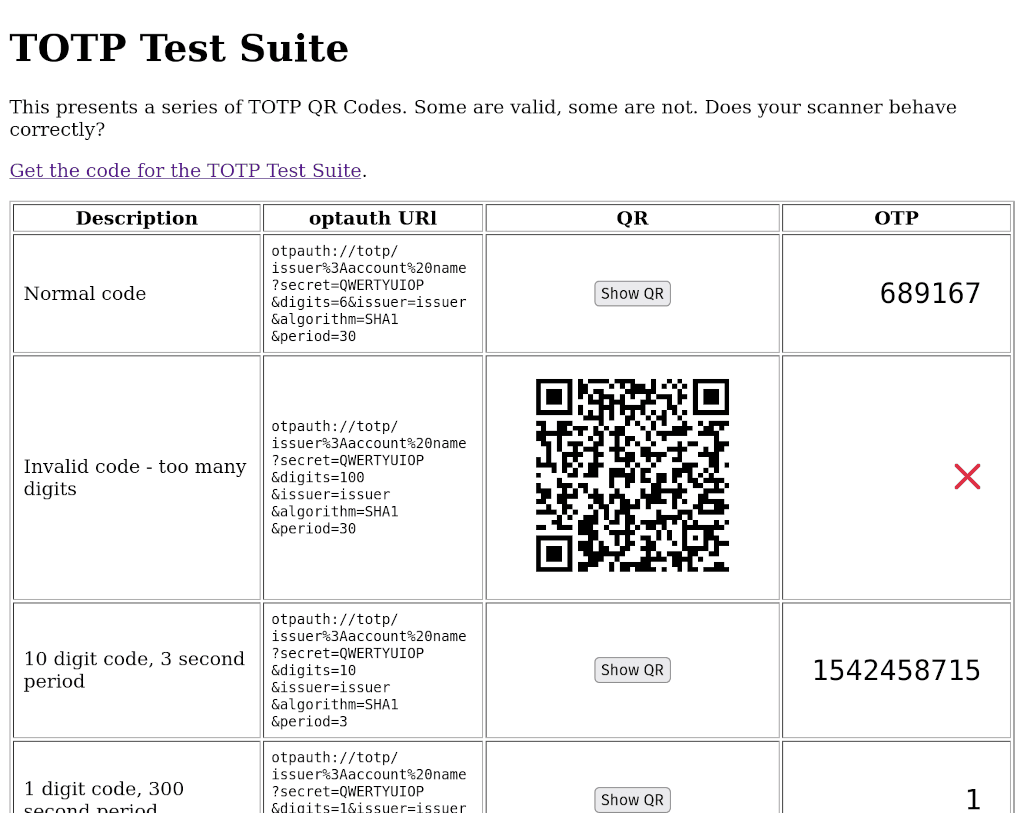
Because I'm a massive nerd, I actually try to read specification documents. As I've ranted ad nauseam before, the current TOTP spec is irresponsibly obsolete. The three major implementations of the spec - Google, Apple, and Yubico - all subtly disagree on how it should be implemented. Every other MFA app has their own idiosyncratic variants. The official RFC is infuriatingly vague. That's no…
Continue reading →
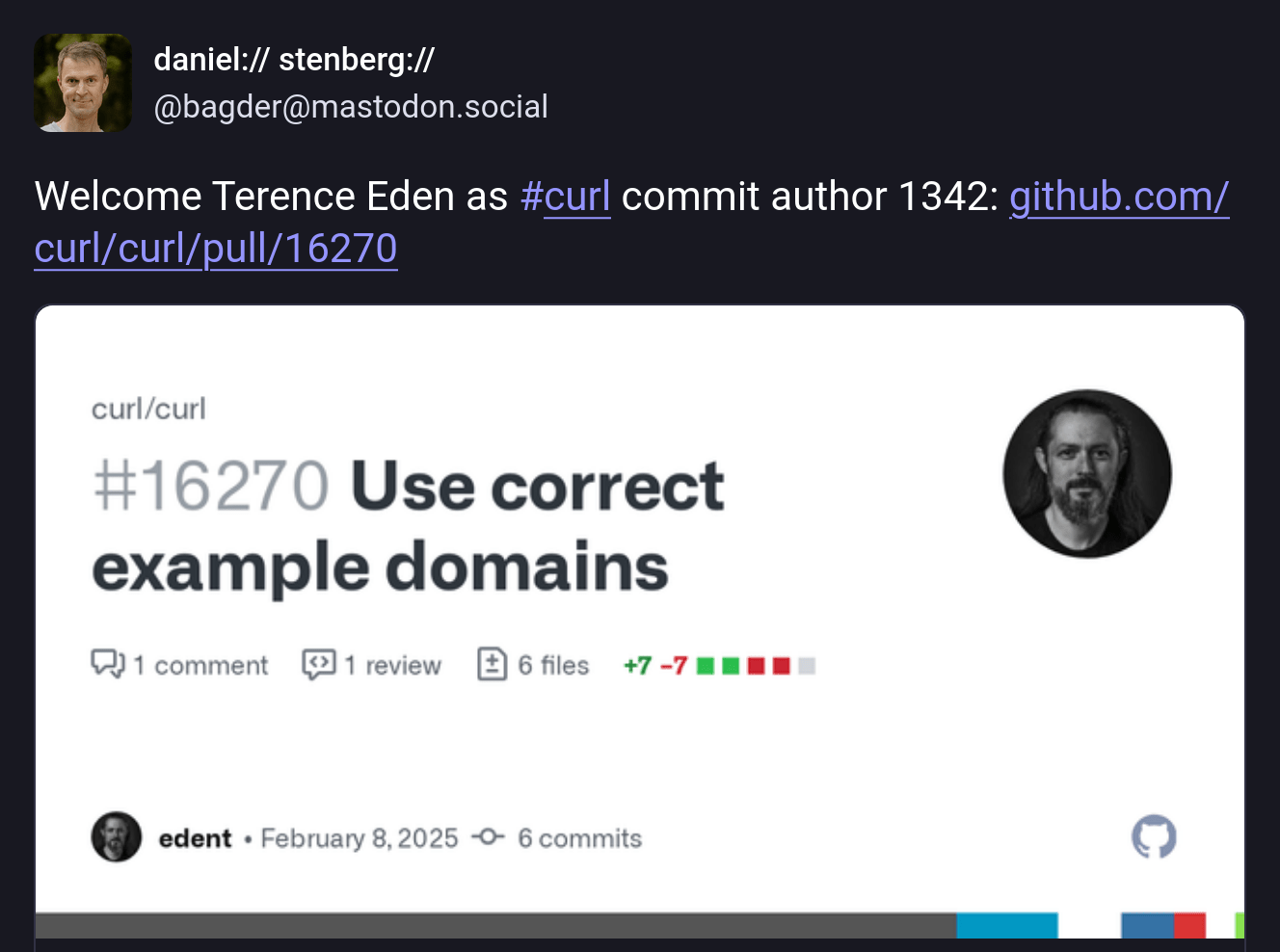
The venerable curl is one of the most fundamental pieces of code in the modern world. A seemingly simply utility - it enables other programs to interact with URls - it runs on millions of cars, is inside nearly every TV, used by billions of people, and is even in use on Mars. And, as of last week, features a small contribution by me! Look, I'm not an experienced bit-twiddler. I can't…
Continue reading →

I was delighted to be invited to speak at FOSDEM. And I was not at all intimidated to be speaking on the cavernous Janson stage. The audience were lovely, asked interesting questions, and - most importantly - laughed in all the right places 😅. Regular readers will recognise this as being an updated version of the talk I gave at EMF 2024 - feel free to watch that one if you want to see if I've im…
Continue reading →