One of the most requested Twitter API features is now available - the ability to get replies to a Tweet as a thread. Long time readers know that I've long been a fan of Visualising Twitter Conversations in 2D Space. But up until now you had to use horrible hacks to get the data. As trailed in their recent blogpost - conversation threading is now part of the official API! This allows you to…
Continue reading →

Mostly notes to myself. My solar panels have an open API. But it's only available if I'm on the same network as the Fronius inverter. I can connect my system to https://www.solarweb.com/ so I can access it anywhere in the world - if I have the right password. SolarWeb has an (optional) guest mode. You can view the panels' performance if you know the secret URl. It looks something like this: …
Continue reading →
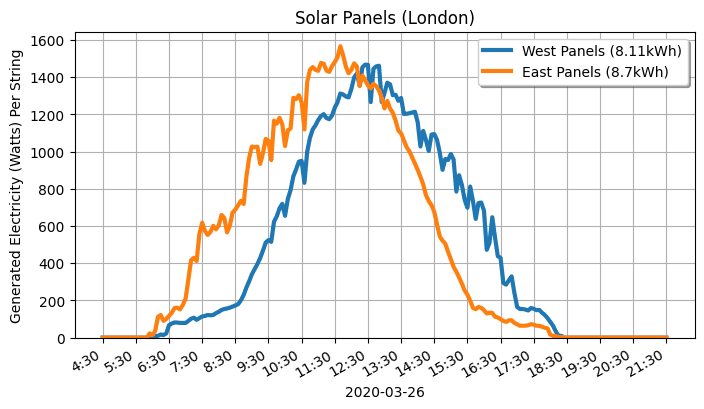
I'm hooking my solar panels up to the Internet! Installation Inverter API & Code My solar panels have an API! It tells me the total amount of power they've generated each day. But there's a small problem... I have panels on the East and West sides of my roof. My solar inverter has two MPPT "String" inputs. That is, East and West supply power separately. Luckily, there's an API for that! …
Continue reading →
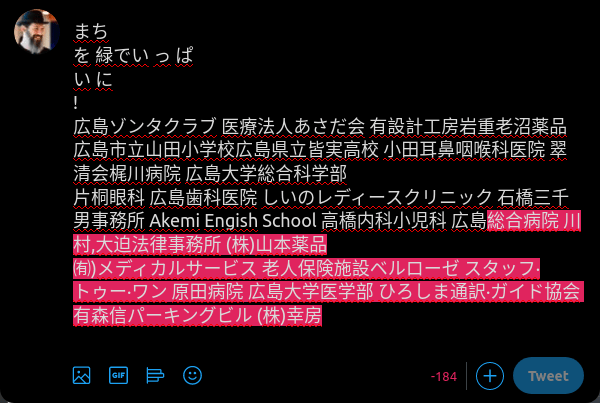
How many characters can a Tweet contain? It used to be 140, back in the good old days. Now it's 280. Unless you're Japanese. Let me explain… I run OpenBenches - a site which collects memorial benches. When a user adds a bench, the inscription is automatically Tweeted. If the inscription is longer than 280 characters, it is truncated. The PHP code to truncate text to a specific length is p…
Continue reading →
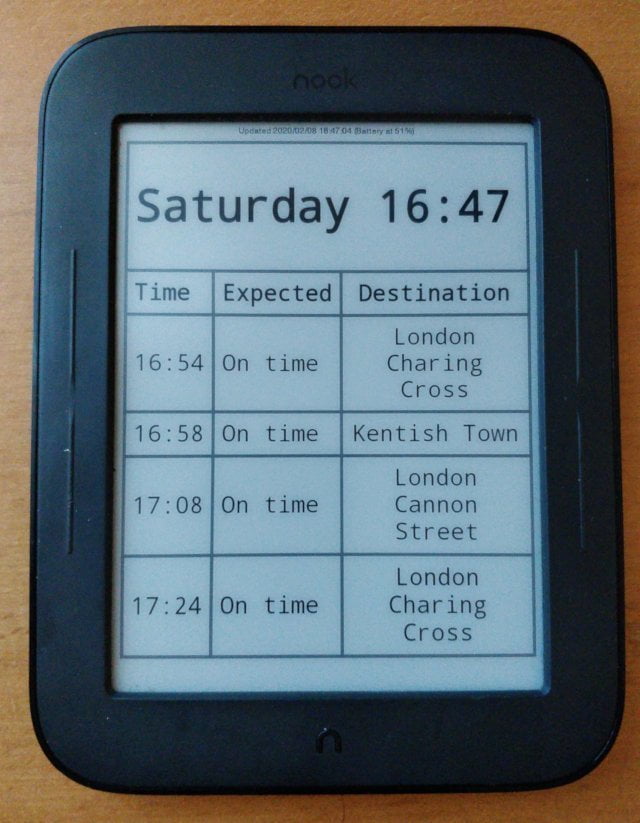
Here's a quick tutorial for turning an old Nook into a passive display. This is an update to my 2013 post End Result An eInk screen which displays the trains I can catch from my local station. It shows the next few available trains, and whether they're delayed. It also shows how long until the next local bus to the train station. Updating the Nook Before doing anything, manually update the …
Continue reading →

I'm going to start this discussion with the why and then move on to the how. Let's begin with a couple of user stories. As the recipient of some data, I want to verify that it hasn't been tampered with. and As the recipient of some data, I want to verify who originally published it. Here's why I think this is important. We are in an era of fake news. A screenshot can be easily altered. A…
Continue reading →

I write book reviews on my blog. I also want to syndicate them to Goodreads. Sadly, Goodreads doesn't natively read the Schema.org markup I so carefully craft. So here's the scrap of code I use to syndicate my reviews. Goodreads API Keys Get your Keys from https://www.goodreads.com/api/keys You will also need to get OAuth tokens For this documentation, I'll use the example keys - please…
Continue reading →

This is a quick and dirty way to turn a DOI (Digital Object Identifiers for academic papers) into an HTML & Microdata citation. I use this to power my Citations page. Schema.org is a Microdata standard which allows machines to read your HTML and create semantic relations between documents. Here's a minimum viable citation: <blockquote itemprop="citation" itemscope…
Continue reading →

Tado is a brilliant smart thermostat. But their API is very poorly documented. This is an updated guide for 2019. I am indebted to Stephen C Phillips' original documentation. Getting started You will need: A Tado (duh!) Your Username (usually your email address) Your Password A Client Secret Getting the client secret I'm using this client secret:…
Continue reading →

A few years ago, I wrote about Google's secret screenshot API - a slightly cumbersome way to take website screenshots for free. There's another service which you may find simpler to use - mShots from WordPress. Here's how it works: Take any website link: https://twitter.com/JennyVass/status/1067855777040338944 URL Encode it: …
Continue reading →

I rate every pint I taste using the Untappd app. Think of it like TripAdvisor for lager, stout, cider, bitter, and all manner of other beery goodness. Seriously, I've reviewed over 600 different drinks Recently, I decided to see if I could self-host my beer check-ins. The first step - extracting my own data from Untappd. Pay To Play If you become an Untappd Supporter for US$5 per month, you…
Continue reading →
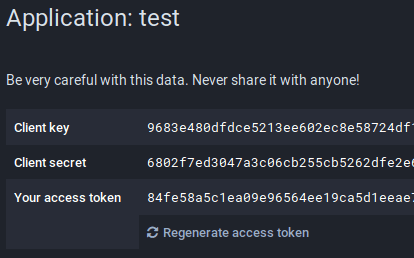
Twitter is dead! Long live Mastodon! I've written lots of 'bots for Twitter - and been part of their developer outreach programme. Lots of us have politely requested improvements to the bot experience on Twitter, but to no avail. So, today I'm going to show you how to quickly and easily write your first Mastodon-bot. Bots In Spaaaaaaace Step 1 - you need to set up a new account for your bot. …
Continue reading →