Fake cash-machines are an increasing problem around the UK. Criminals attach all sorts of machinery - including fake fronts - to ATMs with the aim of stealing cash or card details. Wandering around Oxford yesterday, I noticed this sign attached to a bank's ATM: "This ATM is running slow and may take a while to return your card. Please be patient while we try to resolve this issue. Thanks.…
Continue reading →
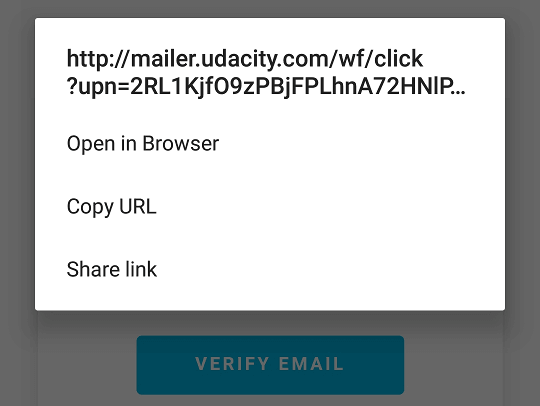
Look, I know your company wants metrics. I know your boss wants to see the exact percentages of people who click on links in your emails. Your sales team are desperate to track conversions. Someone wants to optimise your funnel for reasons which are unclear to you, a lowly engineer. So you make the mistake of adding tracking to every email you send out. Including sensitive ones. I recently…
Continue reading →

Spotted in London, yesterday. A large, Microsoft Windows-powered advertising hoarding has been hijacked. It's not uncommon to see broken-down Windows displays - I run https://windowsisbroken.tumblr.com/ - which is dedicated to pointing and laughing at such mistakes. But this is the first time I've seen a display repurposed for profit! It appears to be running NiceHash Miner Legacy. A…
Continue reading →
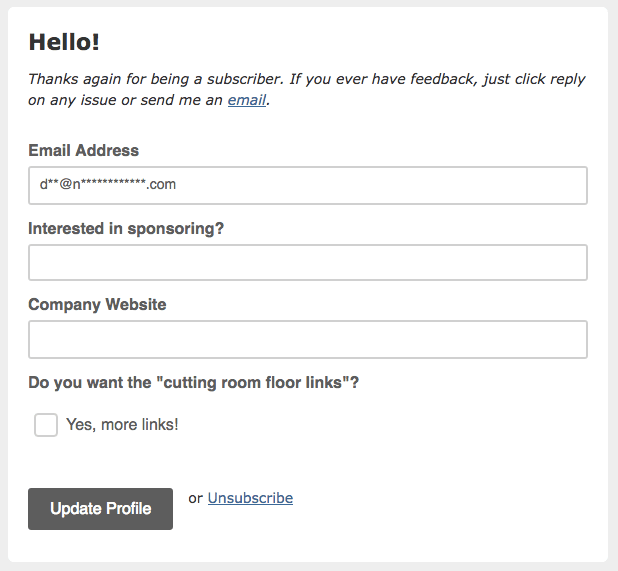
An annoying privacy violation from leading email newsletter company MailChimp. Responsibly disclosed on 2017-12-04. When you click a link on a webpage or an email, your browser opens up that link and sends the newly visited webpage a Referer Header. (The misspelling is a historical artefact.) This says "Hello new site, I was referred here by this previous website." This has some privacy…
Continue reading →

Me being grumpy and stupid again. I have an IP Camera on my LAN, I want to connect to it via HTTPS. I can't. Why is that? Why do this? I have a username and password to access my IP camera. And my TV. And my lightbulbs. And all my networked gadgets. If I try to enter the passwords on a modern browser, I get this error message: It is now an accepted fact that data should be encrypted…
Continue reading →
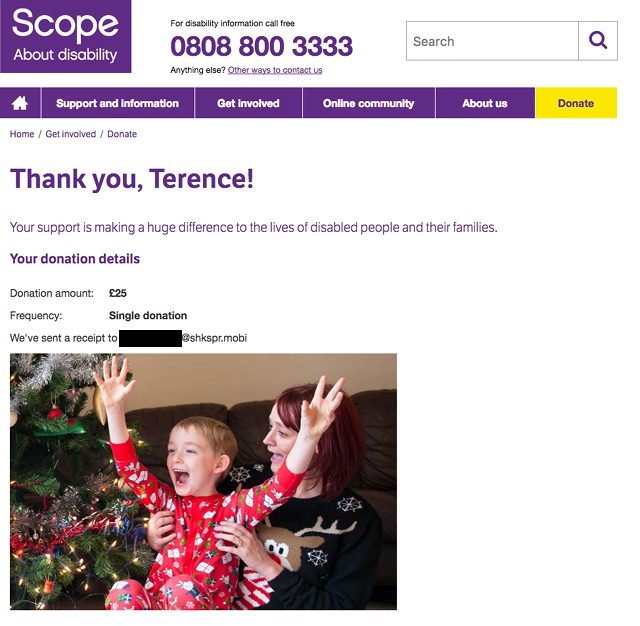
I've blogged before about how backward the Co-op bank is - sadly, they've not improved in the last few years. I needed to close down my business bank account. I hopped on to online banking, provided all my details, went through 2FA with a physical token, remembered my mother's maiden name and began searching the site. There was no way to close the account. Oh well, I guess I'll give them a…
Continue reading →
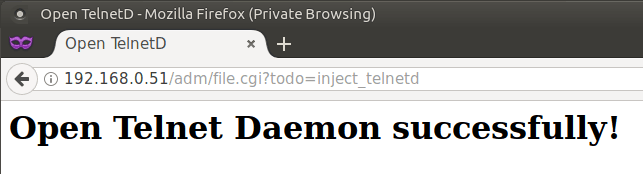
tldr; URL http://[IP]/adm/file.cgi?todo=inject_telnetd Telnet username root Telnet password Aq0+0009 History Four years ago to the day, I wrote an exposé of the hideous security failings of Sercomm IP Cameras. The blog has since attracted 200 comments - as people try to unlock their cameras, and find out what flaws they have. Despite my best efforts at contacting Sercomm - the OEM who …
Continue reading →

Just a quick note on a mistake I see people making. Webcam covers are a cheap and easy way to prevent your laptop's camera from spying on you. But too many of the covers obscure the LED which indicates that the camera is on. If you cover your activation LED then you won't be able to tell if a malicious entity has surreptitiously switched it on the camera. Keep it uncovered and you'll…
Continue reading →
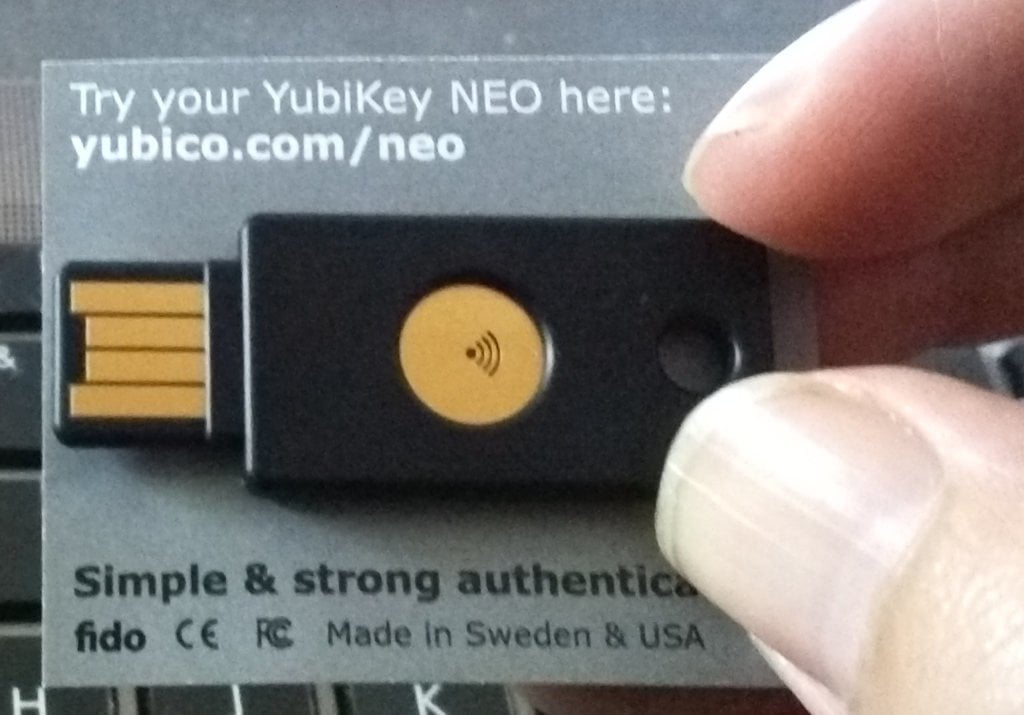
Twenty One. I have 21 accounts which use Two-Factor Authentication. I use the Authy app to manage them all, but it is still a pain to scroll through and find the exact 2FA token I need. Encouraged by my friend Tom Morris's blog post, I picked up a YubiKey NEO for £50. It implements the FIDO U2F standard. Sadly, the YubiKey is substandard and frustrating to use. Here's what I found. First …
Continue reading →

Upon joining the hyper-local social network "Nextdoor" - users are asked to verify their postal address. One option they offer is to have them send you a card in the post. So, I signed up, entered my address, and waited. A few days later, this popped through my letterbox. A few random thoughts... ✅ This is a nifty way to lightly verify someone's address! A service could ask for scans of u…
Continue reading →

Companies face a complicated choice. Make things easy for the customers, or make things secure for them. Convenience seems to take priority most of the time. This forces companies to get their customers to risk their own security. In this example, we see Verizon Wireless asking their customers to type their passwords into Twitter for everyone to see! This is dangerous. It is likely that many …
Continue reading →

Phishing is the devious practice of tricking users into giving away their usernames and passwords to fraudulent sites. It is big business, and the best defence against it is constant vigilance. I'm going to walk you, step-by-step, through a scam that targetted me today. Along the way we'll see how to avoid falling prey to these monsters. It starts with a text I was sent this SMS from a…
Continue reading →