I hate creating Alexa skills. What should be a 3-click process inevitably ends up requiring trips to multiple websites, to set up weird parameters, and reading outdated tutorials for obsolete libraries. So this is how to create a self-hosted Skill, using PHP. It runs on your own server and doesn't require any interaction. The Skill At a basic level, all your website has to do is spit out a…
Continue reading →

You are accused of a crime. Who would you rather determined your fate – a human or an algorithm? An algorithm is more consistent and less prone to error of judgement. Yet a human can look you in the eye before passing sentence. Welcome to the age of the algorithm. An all-too-brief journey through the problems with modern AI. If you've been paying attention to the trade-press, many of the s…
Continue reading →

What happens when a robot begins to question its creators? What would be the consequences of creating a robot with a sense of humour? Or the ability to lie? How do we truly tell the difference between man and machine? In "I, Robot", Asimov sets out the Three Laws of Robotics – designed to protect humans from their robotic creations – and pushes them to their limits and beyond. After attending a…
Continue reading →
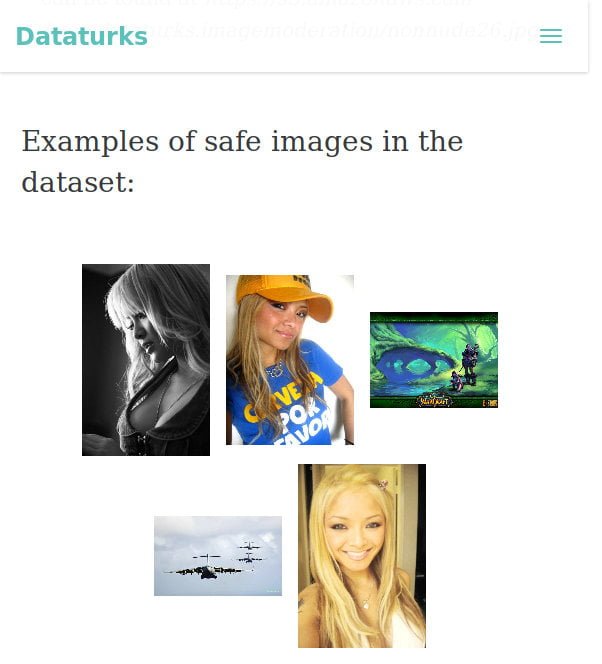
One of my first jobs was as a nudity moderator for Vodafone. People would send in photos and videos and I'd have to manually classify whether they featured nudity or were otherwise unacceptable. It was a bizarre job - one I've discussed before - but today, wouldn't we just throw an AI at it? I recently read "How AI/ML algorithms see nudity in images - Comparison of image moderation APIs by…
Continue reading →

Optical Illusions trick your brain into seeing something that isn't there. Whether it is spirals which don't exist, movements which don't occur, or faces in curved lines - our optic centres are trivially easy to fool. Humans are not alone in this cognitive deficiency. Other animals are also conned into believing something which isn't true. This tomfoolery is not restricted to animals -…
Continue reading →
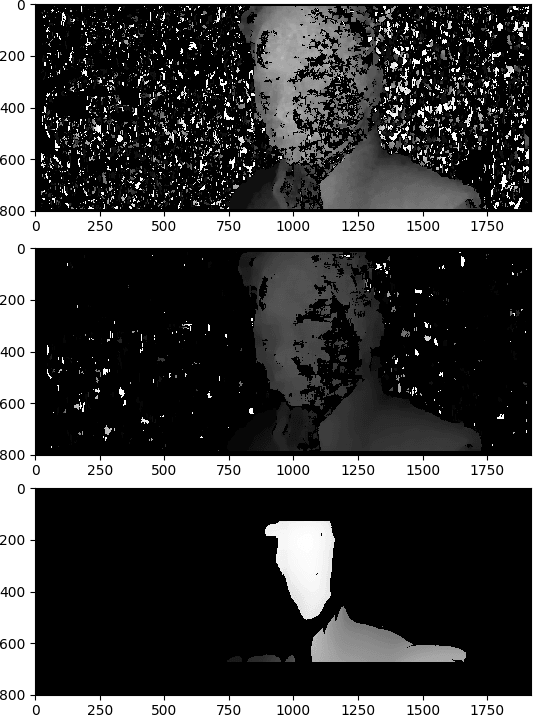
A quick tutorial in how to recover 3D information from your favourite 3D movies. In this example, we'll be using Star Wars - The Last Jedi. tl;dr? Here's the end result (this video is silent): https://shkspr.mobi/blog/wp-content/uploads/2018/04/walker-text.mp4 Grab the code on GitHub. Let's go! Take a screenshot of your favourite scene. Something with a clearly defined foreground and…
Continue reading →

I've been thinking about words. The Chinese word for "train" - the mode of transport - is 火车. Which literally translates as "fire chariot". Long gone are the days when trains were pulled by a fire-breathing engine at the front, and yet this linguistic skeuomorph hangs around. English is not immune from this. The television still asks us to "tune in" even though no-one manually tunes in a rad…
Continue reading →

Imagine that you are sat, blindfolded, in the back of a taxi. How could you tell if you were being driven by a human or an autonomous vehicle? If you've not read Alan Turing's The Imitation Game, I can highly recommend it. The paper is short, well written, and contains a whole world of ideas. This is where we get the concept of the Turing Test. Can a human be fooled into thinking that the…
Continue reading →
Last week I attended a talk by Dr Irina Higgins from Artificial Intelligence company DeepMind. It was a fascinating look at how their AI works, and how it is trained. Terence Eden is on Mastodon@edentIf you've ever played a video game online, it is likely you've been training an Artificial Intelligence agent without realising it.Ethical?❤️ 7💬 4🔁 020:06 - Thu 09 March 2017 Part of the problem is…
Continue reading →
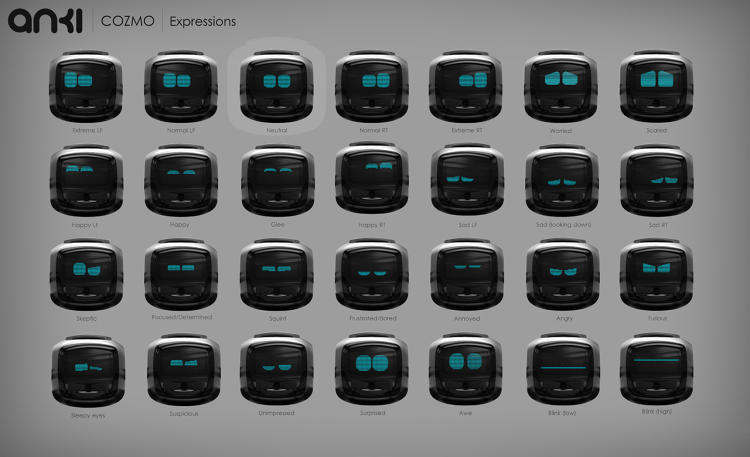
C-3P0 doesn't have a schnoz. The degloved terminator has a bleak hole where his snout should be. Both the Jetson's Rosie and Futurama's Bender are arhinotic. The robot sat in front of me was different. The RoboThespian is an imposing chunk of metal. LEDs blink as servomotors whine. The exposed wiring twists as the arms flex in a crude approximation of humanity. But the face... Oh! The face! A…
Continue reading →

My good friend Dan Appelquist recent wrote a fascinating blog post on solipsism as a design decision. He has a set of Lifx Internet Controlled Lightbulbs. They're great fun, but have some seriously screwy ideas about how people live. One key design of the app is to allow you to automatically switch off all your lights when you exit your house. That's pretty nifty, right? I am still…
Continue reading →