The Twitter Engineering Team have a set of text processing classes which are meant to simplify and standardise the recognition of URLs, screen names, and hashtags. Dabr makes use of them to keep in conformance with Twitter's style. One of the advantages of the text processing is that it will recognise that www.example.com is a URL and automatically create a hyperlink. Considering that dropping…
Continue reading →

This morning, when I logged on to Twitter, I saw a user who I didn't recognise tweeting away in my timeline. I wracked my brains thinking about how they could have gotten in there before I realised it was a long-dormant friend who had changed their name and avatar. But, in thinking about how a spammer could infiltrate one's timeline, I think I came up with a fairly bullet-proof method to spam…
Continue reading →
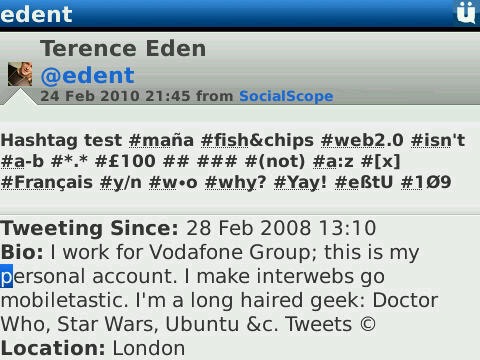
This is one of the longest and geekiest posts I've done. It's a work in progress. All comments and abuse welcome. #hashtag – As long has there has been a way to search Tweets* people have been adding information to make the easy to find. The #hashtag syntax has become the standard for attaching a succinct tag to Tweets. < p>The Twitter Engineering Blog That's all well and good, but as I d…
Continue reading →

What is "Implicit Knowledge"? Essentially it's stuff that everyone knows, but no one has written down. Usually it's something that people have worked out through their own experiences. This sort of knowledge is common in life - but is fatal in computing and design. Take the following tweet I received. Mark Hawkins …
Continue reading →

There are many "rules" when it comes to User Interface / User Experience design. One that I try to stick to is "Don't let users do things they can't do." It's one of my gripes with Linux. If you're editing a configuration file, you are relying on yourself to sanity check your input - often without knowing what the limits are. Take these two different examples. In a text file, we might have: …
Continue reading →

Twitter have announced that all third party site will have to use OAuth. You will no longer be able to just type in your username and password to get access to Twitter via your favourite web client. Usually, I would be a big fan of this move - especially if it forces password anti-pattern sites like TwitPic to implement the new, secure standard. This means that you won't be able to log in to a …
Continue reading →

I'm a big fan of OAuth - despite some claims to the contrary. It's an excellent way of teaching people not to stick their username and password into any old site which asks for it. Which is why I'm so incredibly disappointed in Twitter's implementation of mobile OAuth. For a service which started out operating by SMS, Twitter takes a surprisingly unenlightened view of mobile. It's main mobile …
Continue reading →

Facebook has a funny idea of society. From telling you to reconnect with dead friends, to offering your partner up as a "single" in your area - Facebook has a habit of getting things wrong. My partner and I, like many married couples, live together. We speak over breakfast, commute together and send each other emails and texts throughout the day. But we don't do any of this on Facebook. This …
Continue reading →

When I was a student, I had a brilliant idea. Why not have a stand at every train station where you could sync your Palm Pilot with the latest news? Insert a pound in the slot, press the button for The Times, aim your handheld's IrDA at the blinking light and ZAP! All the latest news for you to read on your train journey. It's just as well that my idea never got out of the paper prototyping …
Continue reading →
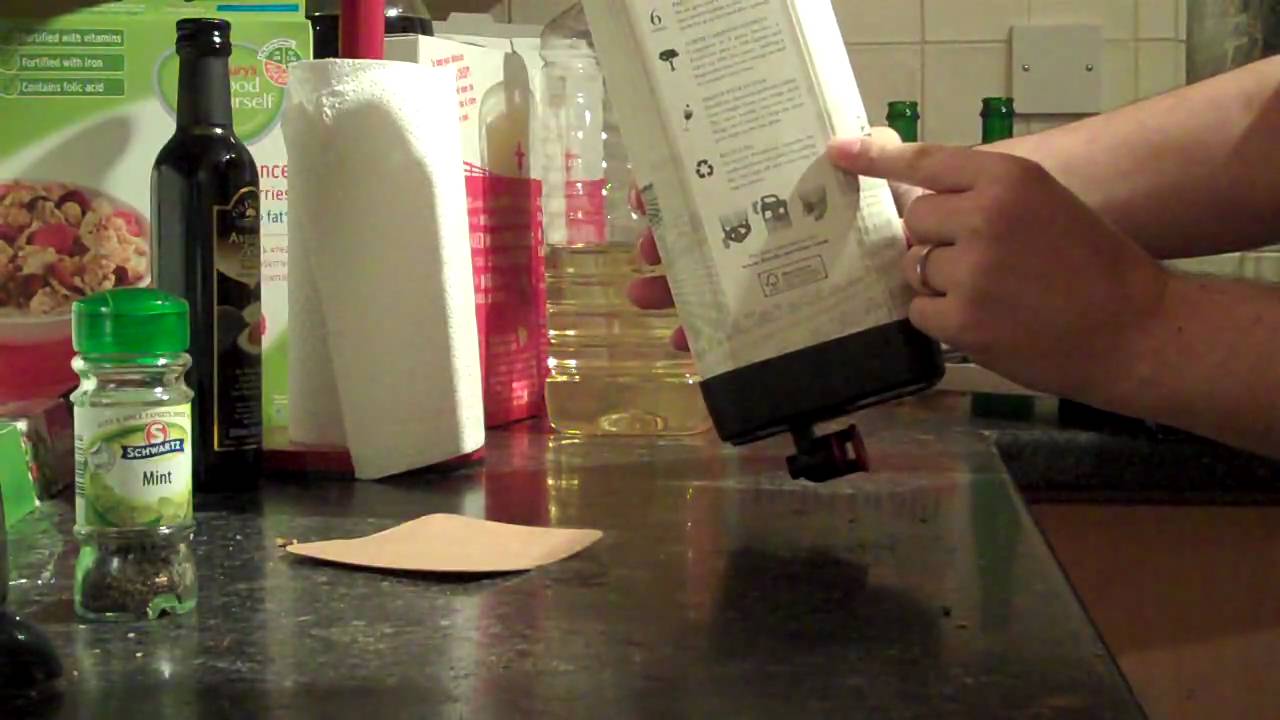
Earlier this month, the lovely people at FreshCase sent me some boxes of wine. Alex Hilton wanted to know how easy it was to recycle. So, for your edification and delight, I present... Recycling The FreshCase Disclaimer These boxes of wine were sent to me for free. Enjoy alcohol responsibly. Do not attempt without adult supervision. …
Continue reading →

Seesmic, a service I've not tried before, have released a Twitter client for the BlackBerry. Is it any good? How does it compare with the features of Dabr or the usability of UberTwitter? Find out! Getting the client was fairly simple, but could be better. Simply visiting http://seesmic.com was enough to bring up a mobile friendly page with download instructions. However, scrolling down…
Continue reading →
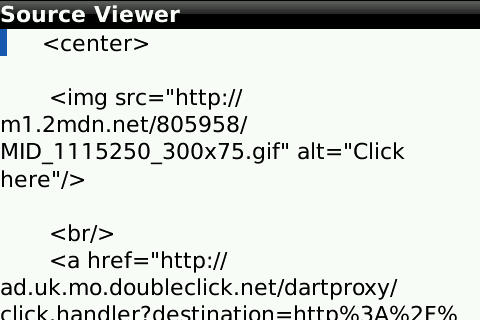
How do you indicate that something on the web is "clickable"? The W3C - the body which sets the standards for the Web - recommend you don't use "Click Here" for link text. Normal text is usually underlined and / or a different colour when it is a hyperlink - images don't have any specific decoration to indicate you can click on them. In this animated GIF, an advert for Lexus, we see a call to a…
Continue reading →