

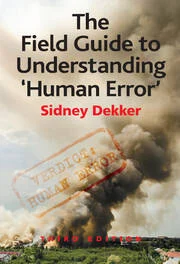
This is such a useful book. It makes the case that there's no such thing as "human error" - instead most catastrophes are caused by system issues, misaligned incentives, and unrealistic processes.
You are not the custodian of an otherwise safe system that you need to protect from erratic human beings.
By its nature it is a little repetitive. I suspect it's the sort of book students and business leaders will be expected to dip into on an ad-hoc basis for their MBA studies.
It's also chock-full of anecdotes which demonstrate how quite serious failings are often erroneously reduced to "human failure". Some of those stories are rather distressing - featuring death, dismemberment, plane crashes, and the like - but they also feel a little like "just so" stories. They illustrate the points well, but felt to me a little voyeuristic.
I'd go so far as to say it is probably one of the best management books that I've read:
holding people accountable is fine;
• but you need to be able to show that people had the authority to live up to the responsibility that you are now asking of them;
• if you can’t do that, your calls for accountability have no merit, and you’d better start looking at yourself.
I'm a big fan of using bullet-points for books like this. It is far too easy for important insights to get buried in the middle of a paragraph of waffle.
And it isn't just for management types. Anyone involved in computers needs to read and understand this.
new technology allows a system to be driven closer to its margins, eroding the safety advantage that was gained.
Although it doesn't venture into politics and government, I think it also applies there. Consider this:
What people were doing was reasonable in the eyes of those on the inside the situation, given the pressures and priorities operating on them and others doing the same work every day.
Modern political discourse often implies that decision makers are incompetent buffoons who frequently make errors. I think the truth is rather closer to what the book suggests. Given all the information (which the commentariat rarely have) and the systemic incentives (which are often set by the electorate) - most decisions look reasonable from the inside. A more systems based view rather than hindsight analysis would be useful for everyone.
There are a few slightly naff clip-art illustrations which are probably better suited to a crappy PPT than a serious book.
It is also a pity the eBook is so malformed. The HTML is full of things like <p class="h1"> rather than using proper semantic headers, which means the built in style-sheet must be used, which means you can't easily change the default font colour (dark grey on eInk looks rubbish). I'd love to see some of the tools and techniques proposed in this book applied to the organisation which created this rather terrible formatting.
The author is extremely generous with his citations and points to hundreds of resources for readers to explore.
A worthwhile book for anyone who deals with even moderately complex systems - if you can put up with the error-riddled formatting.
 Ethical Book Search
 Read on Amazon Kindle
 Audiobook and ePub from Kobo
 Used from Alibris
 Listen on Audible
 Buy from an independent bookshop
 Borrow from your local library
 ISBN: 9781315558172


One thought on “Book Review: The Field Guide to Understanding 'Human Error' by Sidney Dekker”
@Edent it's a great book
| Reply to original comment on hachyderm.io
More comments on Mastodon.
What links here from around this blog?