

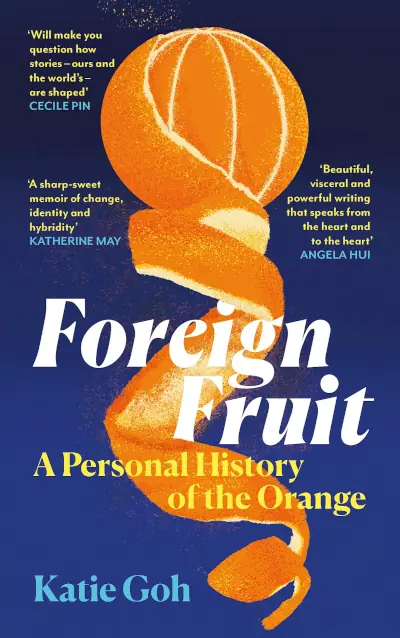
I didn't care for this book. It attempts to interweave botanical and cultural history with an autobiography and ends up doing neither particularly well.
For every dose of poetry about the far-flung and exotic journey of the fruit, there's a dull recitation of facts from Wikipedia. Occasionally various origin myths of citrus varieties are presented - there's no attempt to engage with them, seek out the truth, or comment on what they might mean.
Instead, the author seems more interested in inserting herself into the narrative. It's all rather uneasy. She spends a lots of times talking about hard it is for immigrants and their children. But her dad was a doctor who chose to stay in his new country, she's a fairly prominent journalist, and they spend a lot of time jetting across the world.
I know we're all fighting a battle no one else can see, but this isn't the story of someone's struggle against insurmountable odds.
There's an excruciating passage where she tries to rail against the evils of colonialism and expects her family, who grew up under colonial rule, to support her:
She set down her cup with a steady hand. ‘The British did some good things and they did some bad things,’ she said. ‘But what they did is in the past lah.’ She shrugged and picked her cup back up. ‘In Malaysia we need to think about the future.’
The author is utterly dismissive of other people's lived experience. She and I probably both agree that colonialism was a blunt and savage crime against people. But she can't let go of the fact that some people seem rather nonchalant about it.
I once asked my aunt about her colonial education, and she called it a gift.
It sort of feels like a privileged kid seething that no-one understands how hard it is to be her. I found the solipsism rather distasteful, and the lack of rigour in the botanic history left a bitter taste in my mouth.
 Ethical Book Search
 Read on Amazon Kindle
 Audiobook and ePub from Kobo
 Used from Alibris
 Listen on Audible
 Buy from an independent bookshop
 Borrow from your local library
 ISBN: 9781837261178


