

Back in the late 1990s, I did a brief stint of work experience at the BBC. One of the most memorable moments was sitting in on a meeting about early forms of Interactive TV.
I saw a demo of "Two Way TV". A flimsy grey box which (somehow) integrated with your OnDigital TV Box and connected to a server via a modem. If you were watching "Who Wants To Be A Millionaire" you could play along at home, send in your answers in realtime, and win REAL CASH PRIZES!!!
An anonymous benefactor read my blog post about the tech, had a pootle through their loft, and found one of the trial boxes they'd been sent in June 1997. With their kind permission, here are some photos of the future we never got.
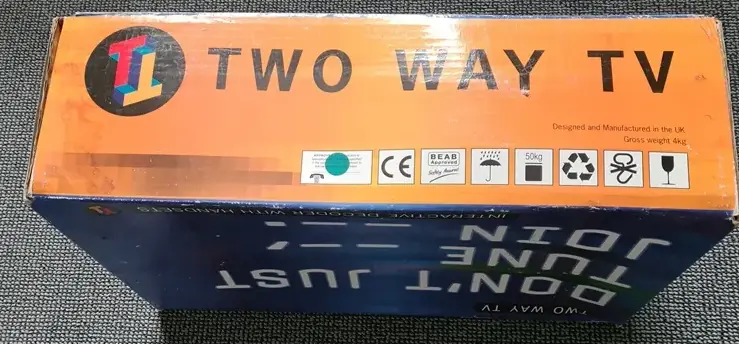
The unit came in a chunky box with enough logos to convince you it was safe to plug in to the phone network.
Flipping it over, we see a little more of the tech-specs and a defunct barcode (5033936000023 for anyone searching) and product number (SD2044N).
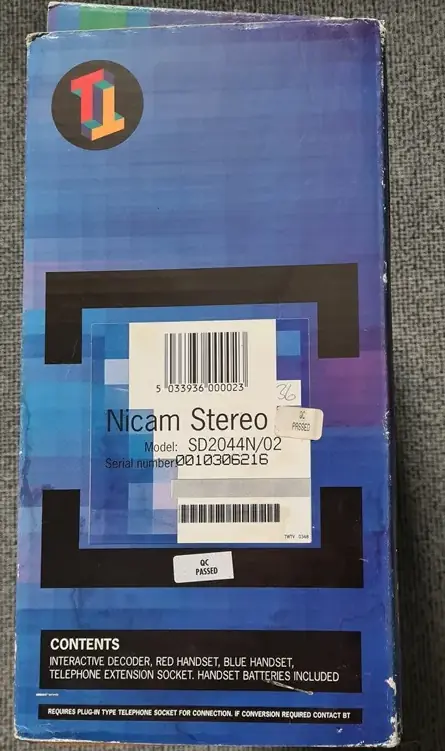
Mmmm! NICAM! So, what did the Set Top Box (STB) actually look like:
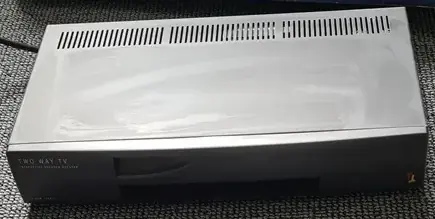
Pretty much the same as every other Digital TV STB of the era. A featureless grey slab. Here's a closer view.

How was it all connected? Here's the rear of the box:
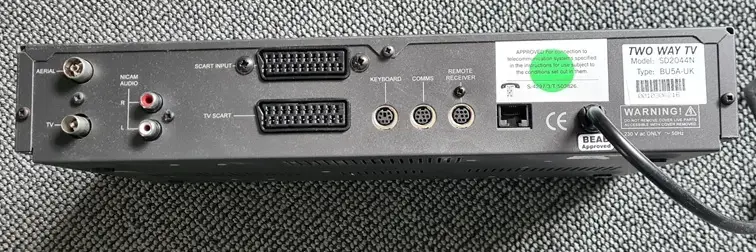
Aerial in and out - I assume it had a digital decoder in it, but could pass the analogue channels through to the TV.
Stereo out, for plugging in to your sound system.
SCART in and out. I assume that let you connect your VCR or games console in pass-through mode.
Keyboard looks like a PS/2 port - which would have been the standard at the time. Comms and Remove Receiver both appear to be 8 pin serial connectors.
Finally, there's a standard telephone port for connecting to the dial-up service which makes it all work.
So, you've plugged in all the wires, how do you actually play the games? The unit comes with two controllers - one red and one blue.
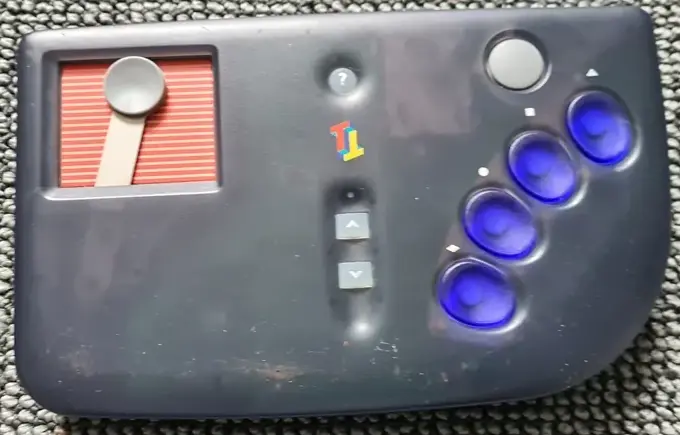
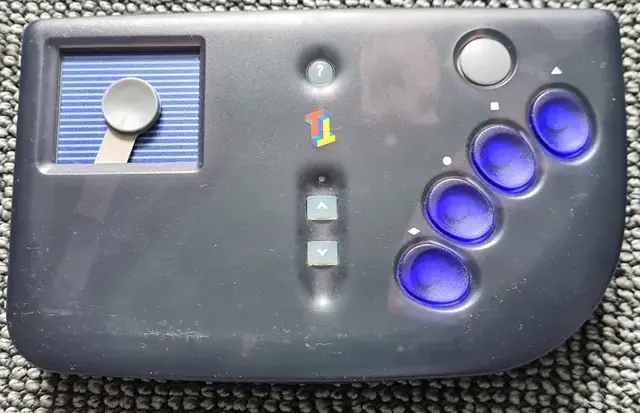
The four buttons (triangle, square, circle, lozenge) were for answering on-screen questions. There's an up and down scroller in the middle and a help button above it. I don't know what the large grey circle does.
But what's the peculiar button on the coloured background? That's an early cursor control! Commercially available touchscreens were still in their infancy. This physical controller allowed you to position a digital cursor on screen. Nifty!
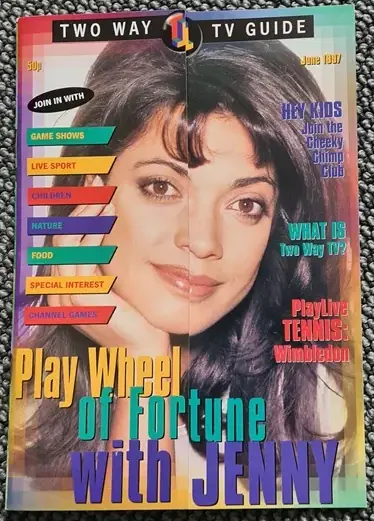
Also in the box was a TV guide:
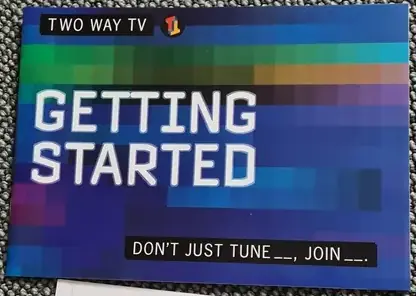
A getting started leaflet:
There's also a service manual:
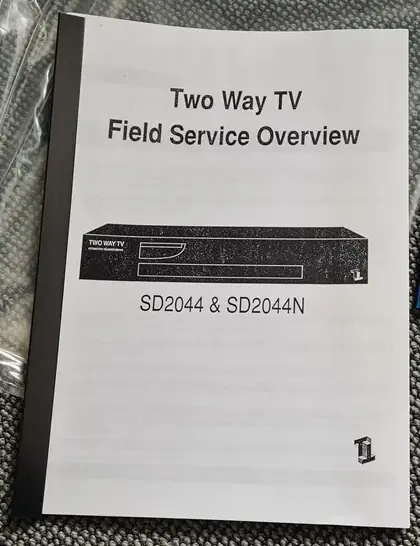
I don't know what the difference was between SD2044 and SD2044N. Do you?
How much would this amazing interactive experience cost you? I've no idea about the upfront payment for the kit, but there's a Direct Debit form for the monthly subscription.
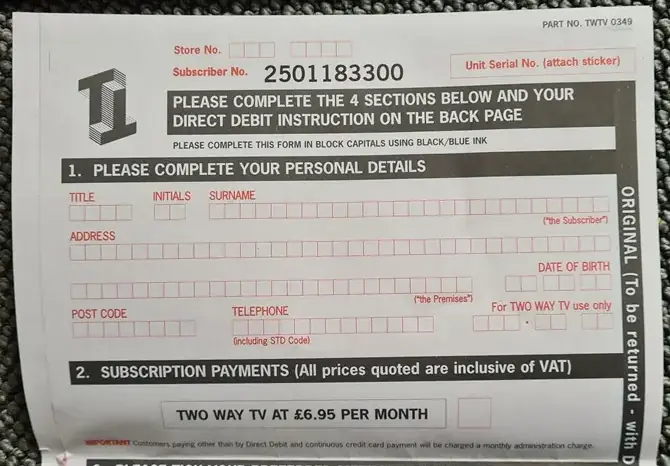
That's about £14 in today's money.
So there you have it! A snapshot of 1997's vision of the future. From my understanding, the box was never a hit with the public. Two Way TV pivoted to other forms of interactive content like premium-rate phone-ins before going bust in 2003.
If you have any more memories of the service, or interesting photos, please leave a comment or get in touch with me.
Update! Some more information has been found:
Ooh! Ooh! I have some niche information about this. It appears that stuff was broadcast to these boxes via teletext databroadcast packets - we've seen mysterious data streams with references to two way tv in teletext recoveries from Channel 4 recordings.
— ZXGuesser ( @zxguesser.bsky.social) 17 June 2026 at 12:59
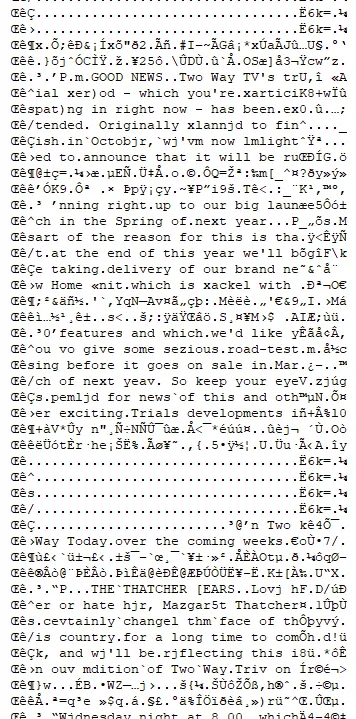
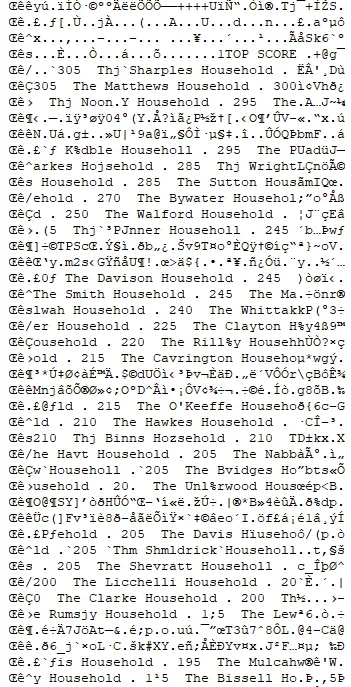
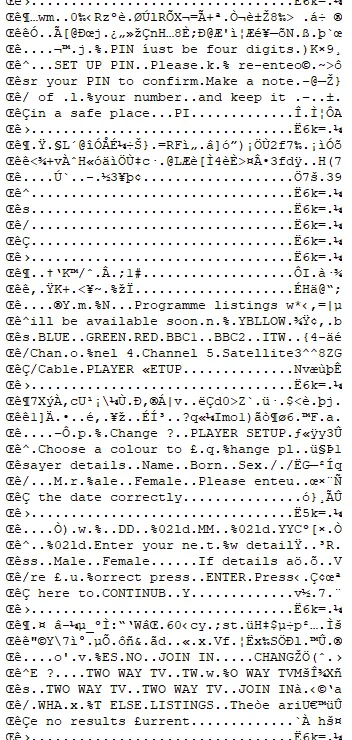
With ZXGuesser's kind permission, here are some of the recovered data packets. They're fairly corrupt (recording Teletext to VHS isn't an exact science) but you can see some clear mentions of Two Way TV.
Here's something about a trial period being extended:
This looks like code for a game:
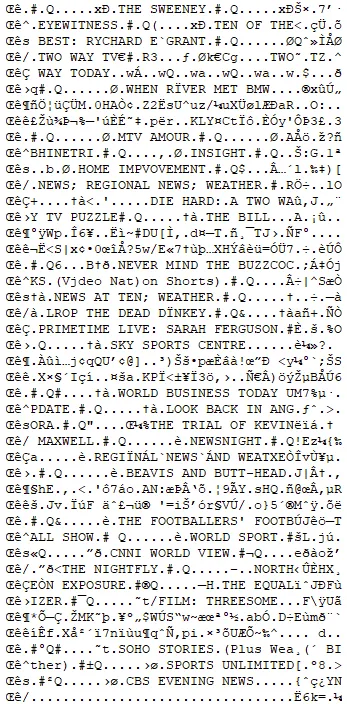
Quiz results by household (possibly test data):
Control code and UI code, possibly for a 68000 device:

If you have more info to share, please let me know.


3 thoughts on “Two Way TV - product photos of 1997's hottest gadget”
My family had a Two-way TV setup: my Dad got it so I had no idea of the pricing. IIRC the big grey button on the remotes was for on/off (as when they were on they ate through the 4-6xAA batteries).
We quite enjoyed it as combined with an Acorn A3010, teenager-developed anagram searcher with custom dictionary and the Channel4 "Countdown" game we were actually getting a little profit per month from it per month. What slowed us down was inputting each letter one-by-one on the onscreen keyboard within the 30 seconds and the numbers game where it presented 4 possible solutions and the right one had to be selected.
There were a few other odd tv programmes with interactivity but we either weren't interested in them or couldn't figure out how to "game" them: and with each "could win cash" entry costing a - admittedly short - premium rate phone call (on top of the monthly fee) you didn't want to over-play.
OFC , this is all dregged up from nearly 30 year old memories so pinch of salt required: but I do remember the Countdown games.
Steve Amor
Was the N for Nicam?
Ooh! Ooh! I have some niche information about this. It appears that stuff was broadcast to these boxes via teletext databroadcast packets - we've seen mysterious data streams with references to two way tv in teletext recoveries from Channel 4 recordings.
| Reply to original comment on bsky.app
More comments on Mastodon.