

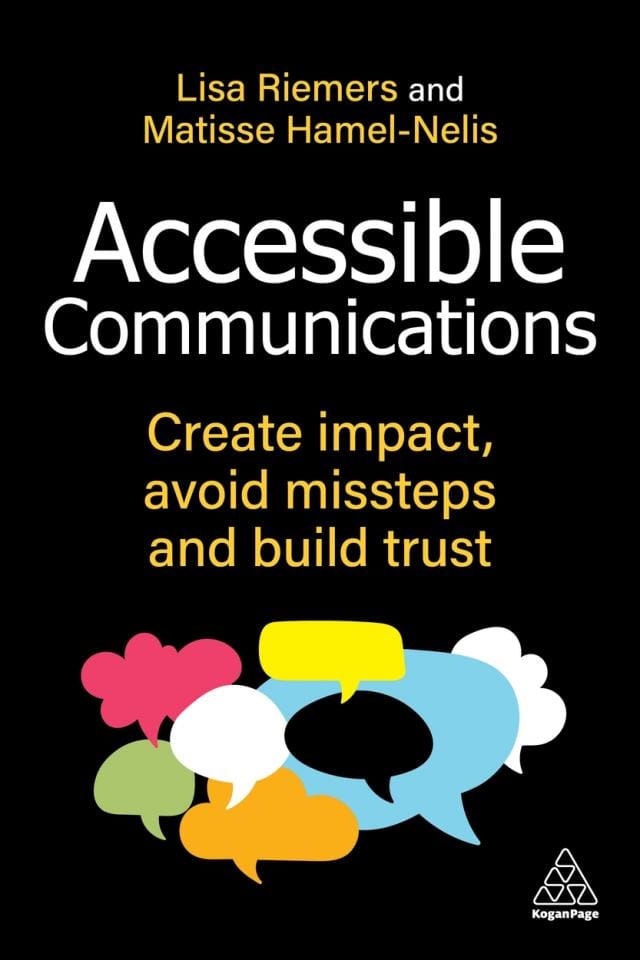
My mate Lisa has written a book!
Along with her pal Matisse, she takes us through the practicalities of publishing communications which are accessible to all. This isn't just about the theory - it takes us across multiple legal jurisdictions, ethical frameworks, and business cases. Once it is done convincing you of the necessity of the work, it begins to explain how to actually create useful and accessible comms.
Some stuff you may have heard before. Everyone knows to add alt text, right? But this goes in for a slightly deeper dive, explaining how different publishing tools expose it, how to get the most out of it, and where it can all go wrong.
Usually books like this focus only on HTML. That's great - but there is a world outside the Web. So this goes through the steps to make PDFs accessible (a necessary evil!) and other tools which comms professionals may be regularly using.
It also doesn't just focus on the US hegemony. Instead there are statistics and case studies from dozens of different countries and cultures. It also looks through the youth lens - are TikTok's bouncing subtitles good for accessibility? For situational stuff like not having headphones, probably but for people with cognitive impairments probably not.
Each chapter ends with "Key Takeaways" and a decent summary of what you've learned. You probably won't read this cover to cover, but it is worth diving in to the chapters which meet your needs. Some of the stuff was intimately familiar to me - but I had no idea about how to make Podcasts accessible.
There's a bit of AI stuff splashed through, as is de rigueur, but it is realistic about its current limitations and how harmful it can be if misapplied.
The book ends with a chunky checklist. I suggest printing it out and stapling it to anyone in your organisation who says accessibility is a waste of time.
 Ethical Book Search
 Read on Amazon Kindle
 Audiobook and ePub from Kobo
 Used from Alibris
 Listen on Audible
 Buy from an independent bookshop
 Borrow from your local library
 ISBN: 9781398621855


One thought on “Book Review: Accessible Communications by Lisa Riemers and Matisse Hamel-Nelis”
Thanks for reading and reviewing, much appreciated 👏
| Reply to original comment on bsky.app
More comments on Mastodon.