
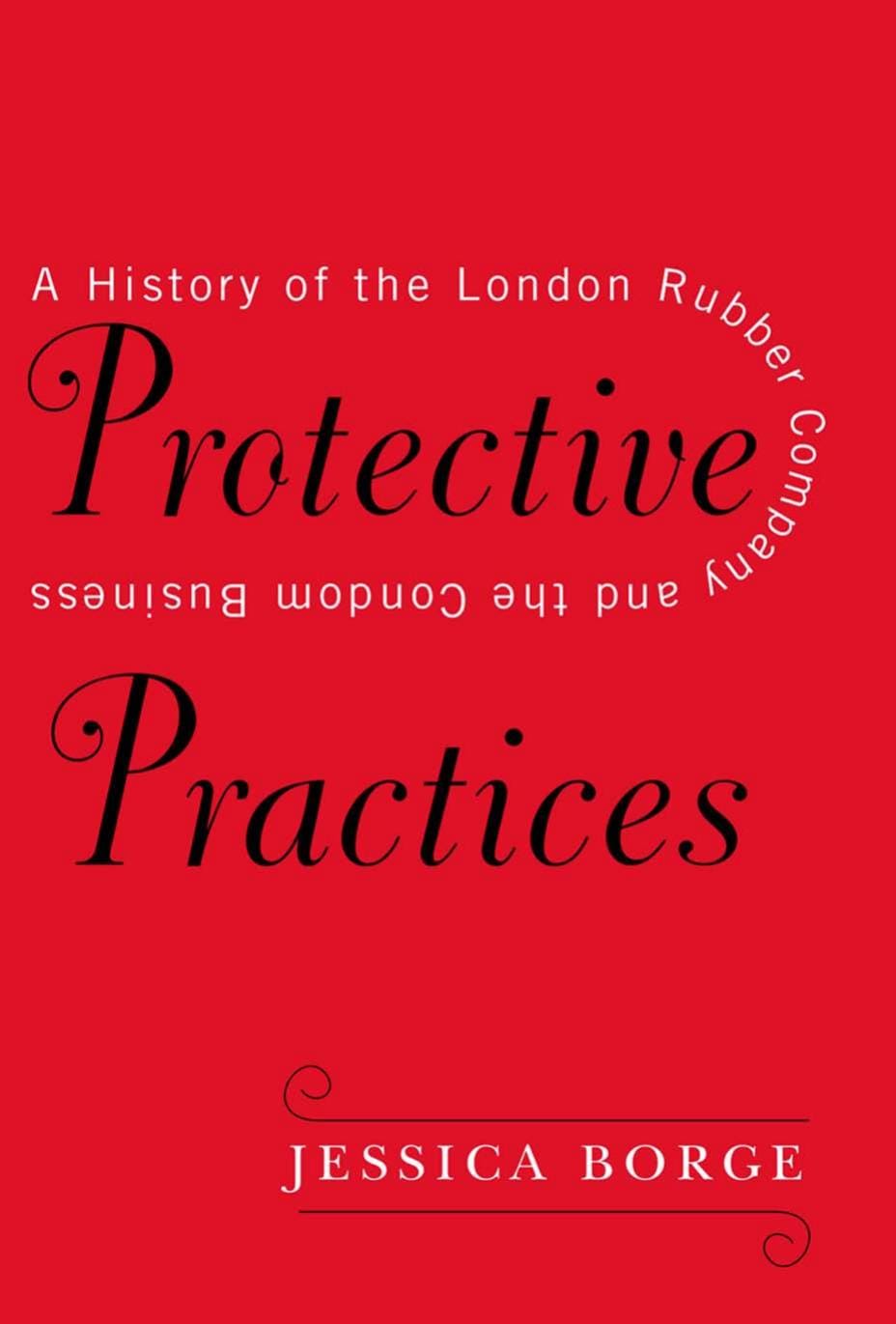
 Did you know that there was a virtual monopoly on condom production in the UK? I certainly didn't! This book is a detailed dive into how and why one company came to dominate the "French Letter" business and the ways in which British culture shaped them.
This is a sober and detailed look through the lifespan of a fascinating British company. It is, in part, corporate biography, marketing textbook, business thriller, and social history. Dr Borge has an eye for the interesting story buried deep within the manilla folders of corporate drudgery.
It starts with a little pre-history of the condom, how it came to be, and how it was marketed. Of interest me was just how attitudes about sex waxed and waned throughout the years:
Both in London and in provincial towns, retailers presented contraceptive supplies blatantly and without embarrassment, so much so that the commercialization of contraceptives was well established by the interwar period. Women and men of any class might purchase them on high streets
There are amazing titbits of historical shenanigans - with the eugenicist Marie Stopes coming in for some well-deserved criticism.
Stopes, who broke away from the NBCA/FPA, believed in the “highly stimulating” (by which we can infer sexually arousing) power of semen absorption through vaginal walls, and vetoed the condom on that basis.
Considering the secrecy surrounding the London Rubber Company, there are a good number of archival photos which enliven the text. In fact, more than secret, at time the company seems to have become a cult - under thrall to its purported founder while whitewashing dissenting heretics.
It is weird to see just how much and little has changed when it comes to attitudes around health and birth control.
Comparable to the later Point of Display law for cigarettes, which came into force under the 2009 Health Act and saw tobacco products covered by opaque shutters in shops, 1930s campaigners felt that attractive packaging enticed consumers into patterns of behaviour in which they would not otherwise engage.
Imagine telling someone from the 1940s that tobacco adverts would be banned in the future but contraceptives and sex aids would be on full display!
At times, it does stray slightly into textbook territory. Each chapter has an introductory summary and an ending recap. I suspect part of the target audience may be marketing students who are assigned to read one specific chapter, or business studies students tearing through it in a hurry.
What amazed me was just how underhand and duplicitous the London Rubber Company appeared to be. They abused their monopoly, tried to force clinics to carry their advertising, and even engaged in astroturfing:
To this end, the ‘Genetic Studies Unit’ was invented by London Rubber’s PR agent, Marc Quinn Associates, in 1964.
We go through politics, changes in attitudes, and the geo-politics of rubber supplies. To say it is varied is an understatement!
For a company obsessed with making money, it is downright strange how their internalised bigotry almost broke the company.
the transition to a new customer base was culturally problematic for the company. Its dependence on addressing its consumer base through normative stereotypes was well established, and it was reluctant to publicly acknowledge the use of its product outside of the normative heterosexual family.
The ending is a little abrupt, covering several decades in a single chapter - it could easily have been twice the length.
Ultimately, if you're interested in the intersection of commerce and the politics of sex, this is the book for you.
 Ethical Book Search
 Read on Amazon Kindle
 Audiobook and ePub from Kobo
 Used from Alibris
 Listen on Audible
 Buy from an independent bookshop
 Borrow from your local library
 ISBN: 9780228004264


What links here from around this blog?